Tell us what you're building. We'll come back with a plan.
Flowstep — workflow automation platform
Overview
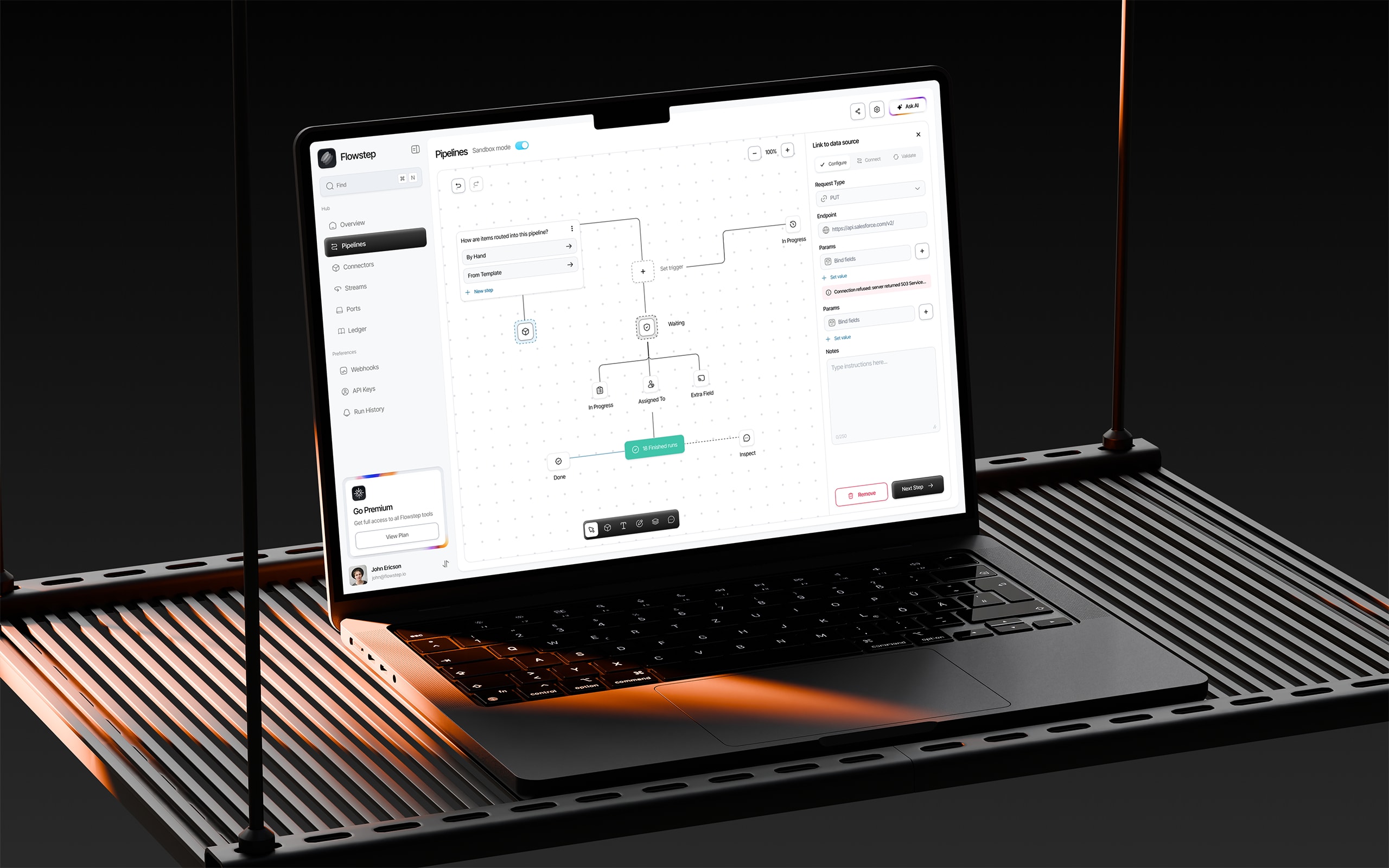
Flowstep is a workflow automation platform that lets teams connect their favourite tools — Jira, Slack, Mailchimp, Intercom, and dozens more — into programmable pipelines that run on autopilot. Instead of switching between tabs and copying data by hand, users wire up triggers, steps, and connectors in a visual builder, then let the system handle the rest.
The founding team approached LevelByte with a working proof-of-concept built on internal scripts and spreadsheets. They needed a production-grade platform that could manage 30+ active pipelines, process thousands of webhook events per day, and give operators real-time visibility into every run — all behind a clean, intuitive dashboard.
Over eight weeks we took Flowstep from prototype to production: data modelling, UX design, frontend and backend development, connector integrations, and deployment on edge-optimised infrastructure — delivering a platform that launched with 31 active pipelines and 99.2% uptime from day one.
The Challenge
Before working with LevelByte, the Flowstep team had validated demand through a pilot programme with a handful of early adopters. But moving beyond hand-wired scripts to a reliable, multi-tenant product exposed several critical gaps that were blocking growth.
Fragile integrations
Each connector (Jira, Stripe, Google Drive, etc.) was a bespoke script with no shared contract, error handling, or refresh logic — meaning one API change could silently break half the customer’s pipelines.
Zero observability
There was no centralised log of pipeline runs, step-level pass/fail status, or webhook payloads — making debugging a manual, time-consuming process for every support ticket.
No visual builder
Users had to define automations in JSON config files. The team needed an intuitive setup flow with triggers, data-source linking, request configuration, and step sequencing to unlock self-serve onboarding.
Scaling bottleneck
The single-threaded execution engine couldn’t handle concurrent pipeline runs, and lacked retry logic, backoff, or dead-letter queuing — critical requirements for any automation tool processing real production traffic.
Project Timeline
Stakeholder + operator interviews, audit of 10 connector APIs (Jira, Slack, Mailchimp, Intercom, etc.), and the full pipeline lifecycle mapped against the 9 real automations early adopters were already running.
Sprint plan, the shared connector contract (so future integrations slot in without rewriting the engine), the Redis-backed job-queue topology, and continuous-deployment cadence with weekly demos.
Wireframes for all 7 key screens (dashboard, pipeline list, visual builder, run logs, webhook viewer, connector hub, settings) with a non-technical operator in mind — no raw JSON, no jargon, just a clear linear flow.
The product itself: pipeline engine with retry + backoff, webhook ingestion, 10 connector integrations, the visual setup builder (trigger → filter → action), the run-log viewer with payload drill-down, and the connector hub with credential rotation.
Load tested with 2,800+ simulated pipeline runs, connector failover and retry scenarios, webhook payload fuzzing, credential-rotation drills, and a full RBAC + RLS security review before promotion.
Production deploy on Vercel’s edge network with Redis-backed job queues, Sentry monitoring, real-time alerting on pipeline failures, and the 7-day post-launch bug warranty window.
Key Features Delivered
Technology Stack
Each layer chosen for the way it serves the product \u2014 not the trend cycle.
Frontend
Next.js on Vercel’s edge — the dashboard, builder canvas, and run-log viewer paint sub-second from any region, which matters when operators are debugging a live failure.
Engine & ingestion
Webhook ingestion + Redis-backed job queues power the pipeline engine. Retries, backoff, and dead-letter queueing are first-class — not bolt-on.
Data & realtime
Supabase covers Postgres, row-level security, and realtime subscriptions for live run status — one stack, no glue, fast queries on the run history table.
Ops & insight
Sentry-tracked errors per pipeline, run duration metrics, and credential-rotation alerts — so the team catches degradation before customers do.
Results & Impact
Eight weeks from internal scripts to a production automation platform — here is what landed in operator hands.
Design & Development Highlights
 01 · HighlightUX
Wireframing & UX Strategy
We structured the product around four core workflows: monitoring (dashboard), creating (pipeline builder), debugging (log & webhook viewer), and managing (connector hub). Each flow was wireframed as a complete journey — from entry to completion — and validated against the 9 real pipeline types (Lead Routing, Churn Alert, Cart Recovery, etc.) that early adopters were already running. This ensured the UI wasn’t designed for hypothetical use cases but for actual operational patterns.
- 4 core workflows mapped end-to-end: monitor, create, debug, manage
- Validated against 9 real pipeline types from early adopters
- No JSON in the operator flow — every config is a visual control
Final Thoughts
Flowstep demonstrates that a complex, integration-heavy automation platform can be designed, built, and shipped in eight weeks without cutting corners. From a visual pipeline builder to 10 third-party connectors to real-time webhook observability — every feature was delivered production-ready.
By combining Supabase’s real-time capabilities with Redis-backed job queues and Vercel’s edge deployment, we built an infrastructure that processed 2,847 pipeline runs in its first month with a 2.1-second average execution time and 99.2% uptime. The platform launched with 31 active pipelines across 9 automation categories and is already scaling to support the next cohort of customers.
This project is a case study in what’s possible when product thinking meets engineering discipline. No shortcuts, no throwaway code — just a clean, well-architected system designed to grow with the business.
More Work
 Real Estate / CRM9 weeks
DealNest
DealNest is a CRM platform purpose-built for real estate brokerages and independent agents. It consolidates prospect tracking, property listings, calendar scheduling, document management, and revenue analytics into a single dashboard — replacing the disconnected spreadsheets and generic CRMs that most agencies struggle with.
 Health & Fitness / Mobile10 weeks
Stride
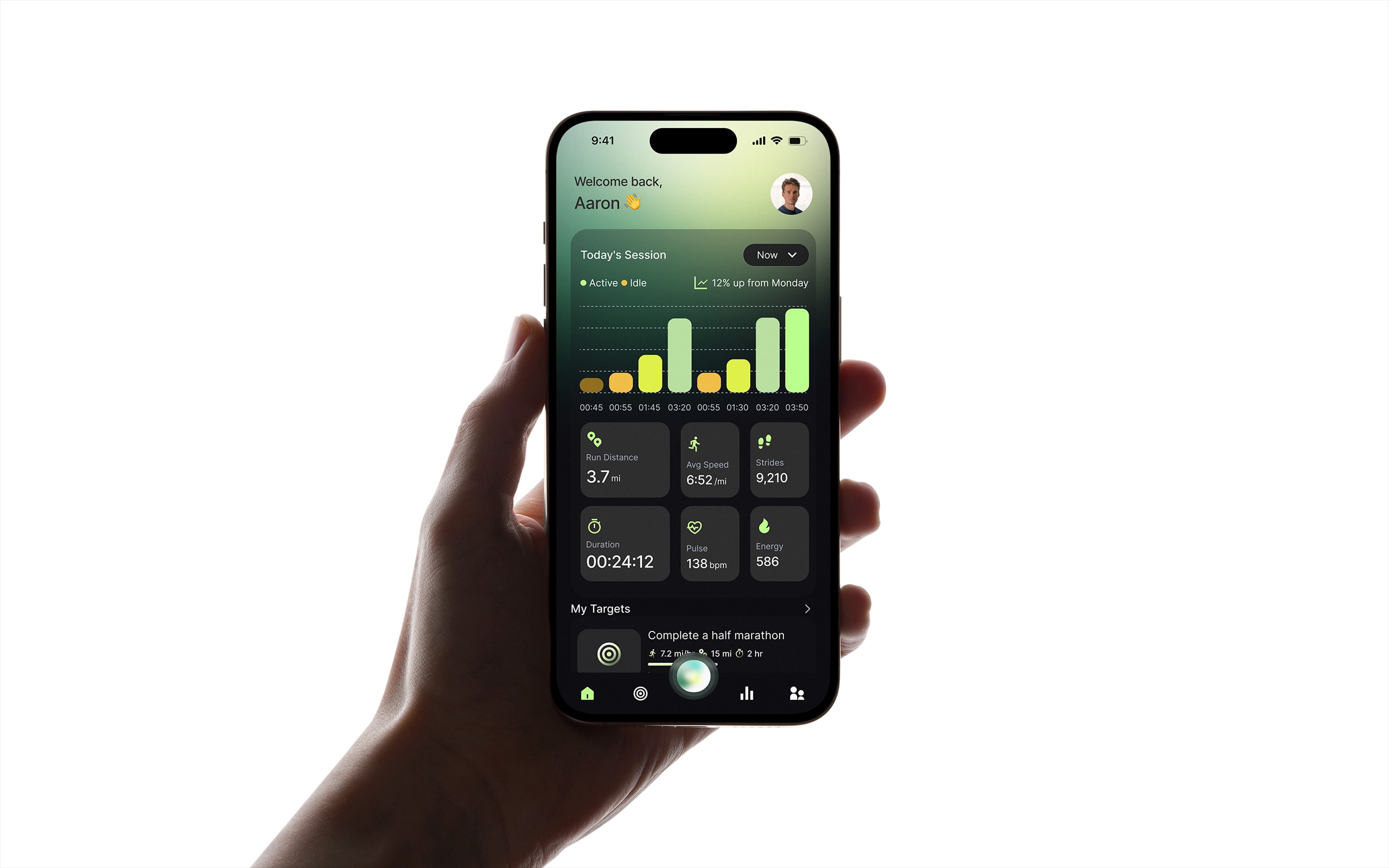
Stride is an AI-powered fitness and running companion built for everyday runners who want smarter training without the complexity of professional coaching apps. It combines live GPS tracking, real-time pace analytics, goal management, and a built-in AI coach that adapts training plans to each runner’s history, body metrics, and personal targets — all inside a clean, native mobile experience.
 Productivity / Project Management10 weeks
Tracklane
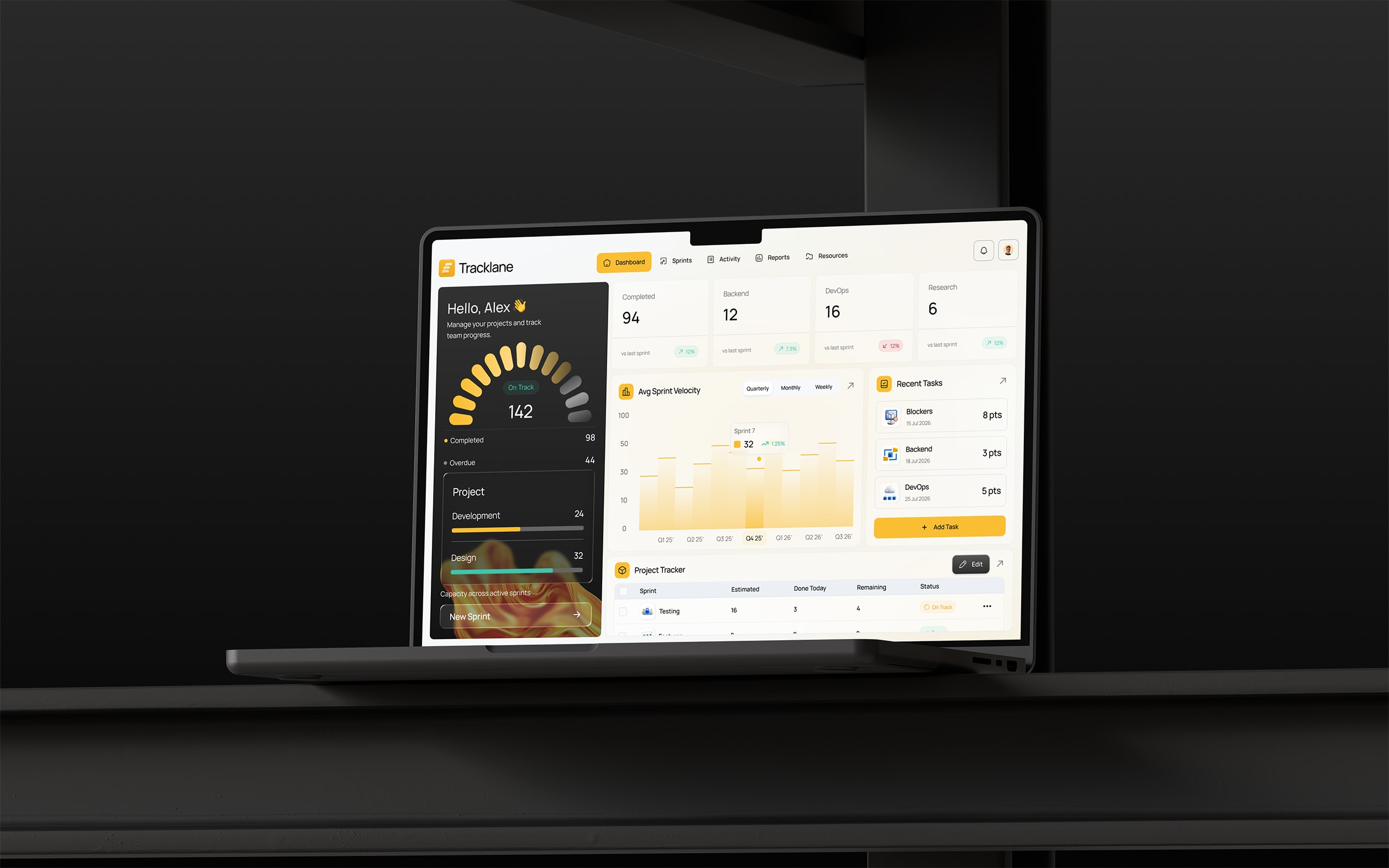
Tracklane is a project management platform built for fast-moving product teams. It gives engineering leads, designers, and project managers a single dashboard to track sprint health, team workload, task status, and delivery velocity — without the overhead of enterprise PM tools.