Tell us what you're building. We'll come back with a plan.
Stride — AI-powered fitness & running app
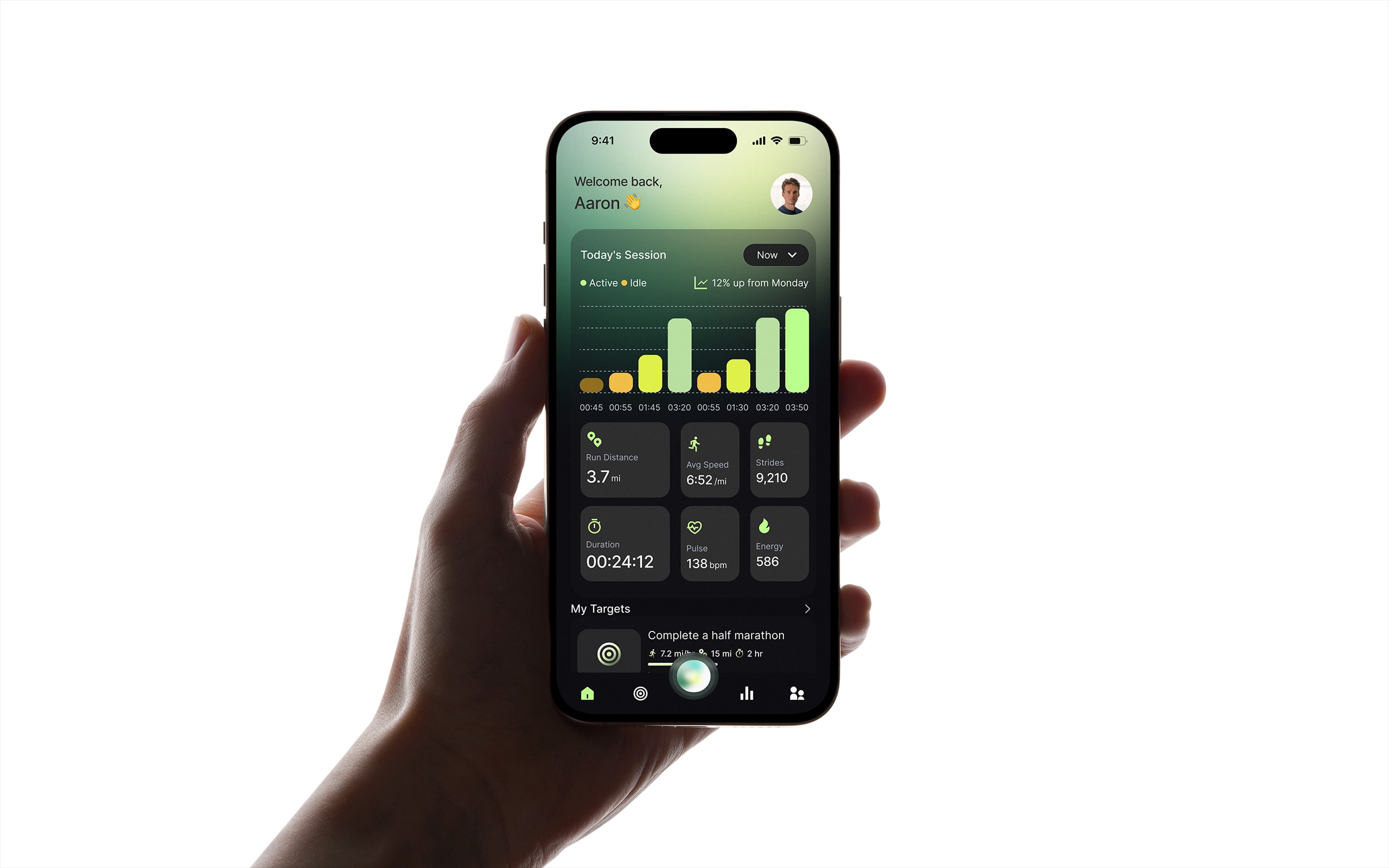
Overview
Stride is an AI-powered fitness and running companion built for everyday runners who want smarter training without the complexity of professional coaching apps. It combines live GPS tracking, real-time pace analytics, goal management, and a built-in AI coach that adapts training plans to each runner’s history, body metrics, and personal targets — all inside a clean, native mobile experience.
The founding team came to LevelByte with a validated concept and a waitlist of 2,400 runners. Their prototype — a basic GPS logger with static training plans — wasn’t retaining users past the first week. Runners wanted live feedback, personalised coaching, and a social layer to train with friends. The existing codebase couldn’t support real-time location streaming, and the static plan engine had no way to learn from a runner’s actual performance.
Over ten weeks we rebuilt Stride from the ground up: native mobile with React Native and Expo, a Supabase backend for auth, data, and real-time sync, an AI coaching engine powered by OpenAI, and a social feed with crew challenges and event discovery — launching to 3,200 runners with a 4.8-star App Store rating in the first month.
The Challenge
Before partnering with LevelByte, the Stride team had proven strong demand through a beta programme with 400 runners in Brooklyn. But turning a basic GPS logger into a full training platform exposed several critical gaps that were blocking retention and growth.
Static training plans
Every runner received the same plan regardless of fitness level, pace history, or personal goals — leading to 68% drop-off within the first week because plans felt generic and irrelevant.
No live feedback
The prototype logged runs after completion, but runners had no real-time visibility into pace, distance covered, or heart rate zones during a session — making it impossible to adjust effort mid-run.
Missing social layer
Runners trained alone with no way to share achievements, join group challenges, or discover local events — eliminating the community motivation that drives long-term engagement.
Unreliable GPS tracking
The existing location pipeline dropped coordinates in urban canyons and tunnels, produced jagged route maps, and drained battery at 3× the rate of competitor apps — eroding trust with every inaccurate split time.
Project Timeline
Field-tested GPS accuracy with 12 beta runners across bridges, park loops, and urban corridors. Mapped the full training lifecycle from goal-setting to post-run review and locked the data model (Runner, Session, Route, Goal, SocialPost, Crew) against real beta data.
Sprint plan, competitive audit of 3 running apps, battery-consumption benchmarks per session length, and the Friday-TestFlight release cadence — so beta runners would catch regressions inside a day, not a sprint.
Wireframes for all 7 core screens (home dashboard, live tracker, AI coach, activity log, goal detail, social feed, post-run summary) with a glanceability audit (type size, contrast, tap targets) before a single feature was built.
The product itself: live run tracker with Kalman-filtered GPS, home dashboard, AI coaching chat (OpenAI), goal engine, weekly insights, social feed with crew posts and event cards, and the activity log with split-by-split breakdowns.
TestFlight beta with 200 runners over 10 days (47 feedback items, 31 bug fixes), 12-device QA matrix from iPhone SE to 15 Pro Max, battery-drain profiling, and offline-session stress testing on subway routes.
App Store submission with full metadata + review notes — approved on the first cycle. Production rollout with Sentry monitoring, push-notification infrastructure, and the 7-day post-launch bug warranty window.
Key Features Delivered
Technology Stack
Each layer chosen for the way it serves the product \u2014 not the trend cycle.
Mobile client
Native iOS + Android from one codebase. Expo handles builds, OTA updates, and native modules so the team ships to TestFlight every Friday without an XCode dance.
Realtime backend
Supabase covers auth, Postgres, row-level security, real-time subscriptions for live run streaming, and storage for route maps and avatars — one stack, no glue.
AI coaching
An OpenAI-powered coach with each runner's full session history as context — adaptive plans, calorie targets, and race-prep advice that improve every week.
Observability
Sentry tracks crashes, slow GPS pipelines, and battery anomalies so issues are caught from the runner's pocket before they show up in App Store reviews.
Results & Impact
Ten weeks from a failing prototype to App Store launch — here is what landed in the runners' hands.
Design & Development Highlights
 01 · HighlightUX
Wireframing & UX Strategy
We structured the app around five core moments in a runner's day: morning check-in (home dashboard with goals and weekly trends), pre-run setup (target selection and music queue), active run (live tracker with map and pace), post-run review (summary with splits, AI insights, and share prompt), and evening wind-down (social feed, crew updates, event discovery). Each moment was wireframed as a self-contained flow and validated with beta runners before production design began — ensuring every screen served a real behavioural need, not a feature checklist.
- 5 core moments mapped: morning, pre-run, active, post-run, evening
- Each flow validated with beta runners before production design
- Zero dead-end screens — every path has a clear next step
Final Thoughts
Stride proves that an AI-powered consumer mobile app can be built in ten weeks without cutting corners on quality, performance, or user experience. By embedding with real runners from day one — testing GPS on actual routes, validating the AI coach with real session data, and pushing TestFlight builds every Friday — we delivered a product that runners genuinely want to open every morning.
In ten weeks, we went from a failing prototype to a polished App Store launch: 3,200 runners onboarded, a 4.8-star rating in the first month, 71% day-7 retention (up from 32% on the prototype), and a 40% reduction in battery drain. The AI coaching engine generates personalised plans that adapt weekly, and the social feed has driven organic growth through shared post-run celebrations.
This project reinforces a core LevelByte principle: the best mobile apps disappear into the moment. Stride doesn’t feel like a fitness app — it feels like a running partner who always knows the right pace, the right route, and the right words of encouragement. That’s the difference between an app people download and one they rely on.
More Work
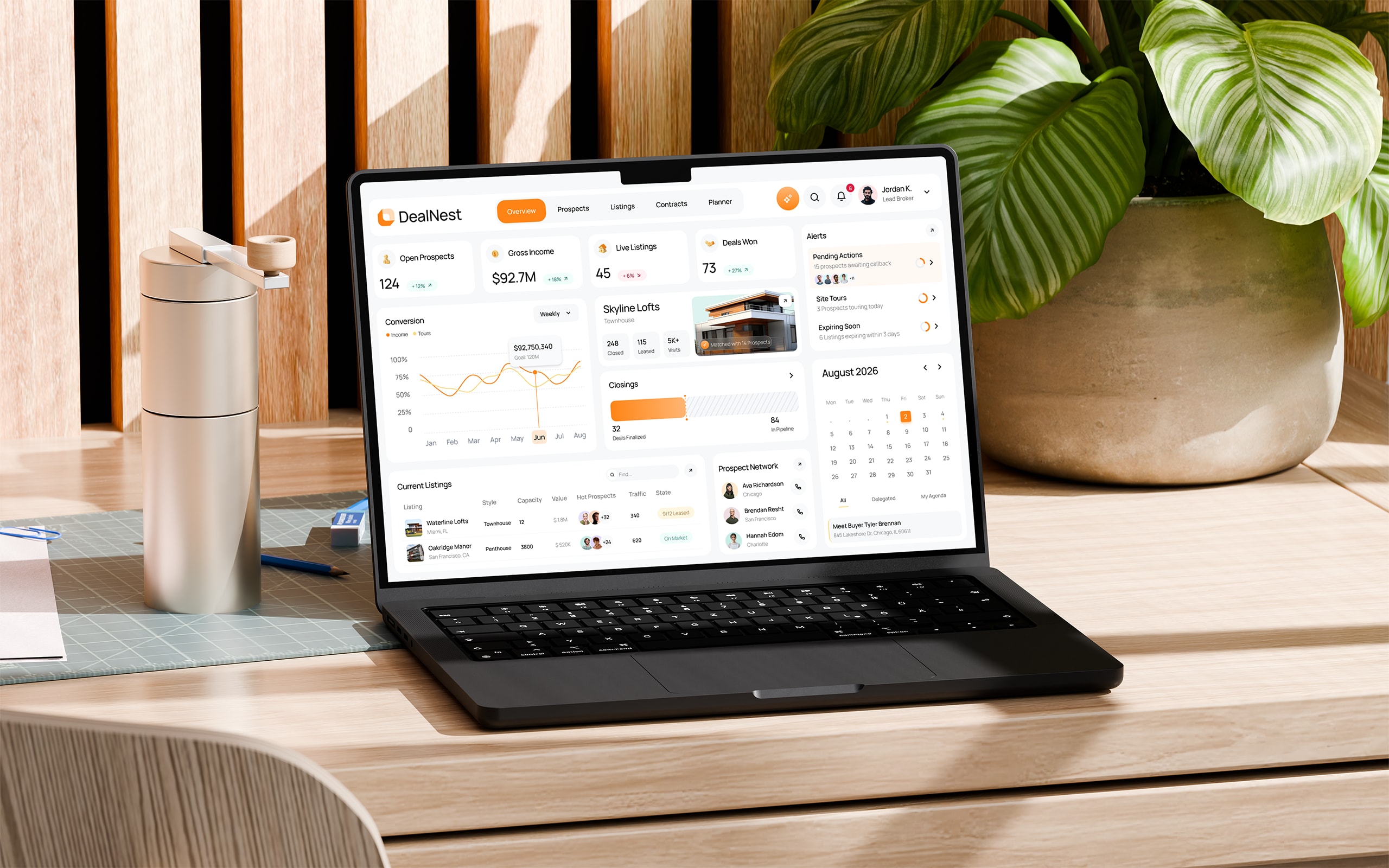 Real Estate / CRM9 weeks
DealNest
DealNest is a CRM platform purpose-built for real estate brokerages and independent agents. It consolidates prospect tracking, property listings, calendar scheduling, document management, and revenue analytics into a single dashboard — replacing the disconnected spreadsheets and generic CRMs that most agencies struggle with.
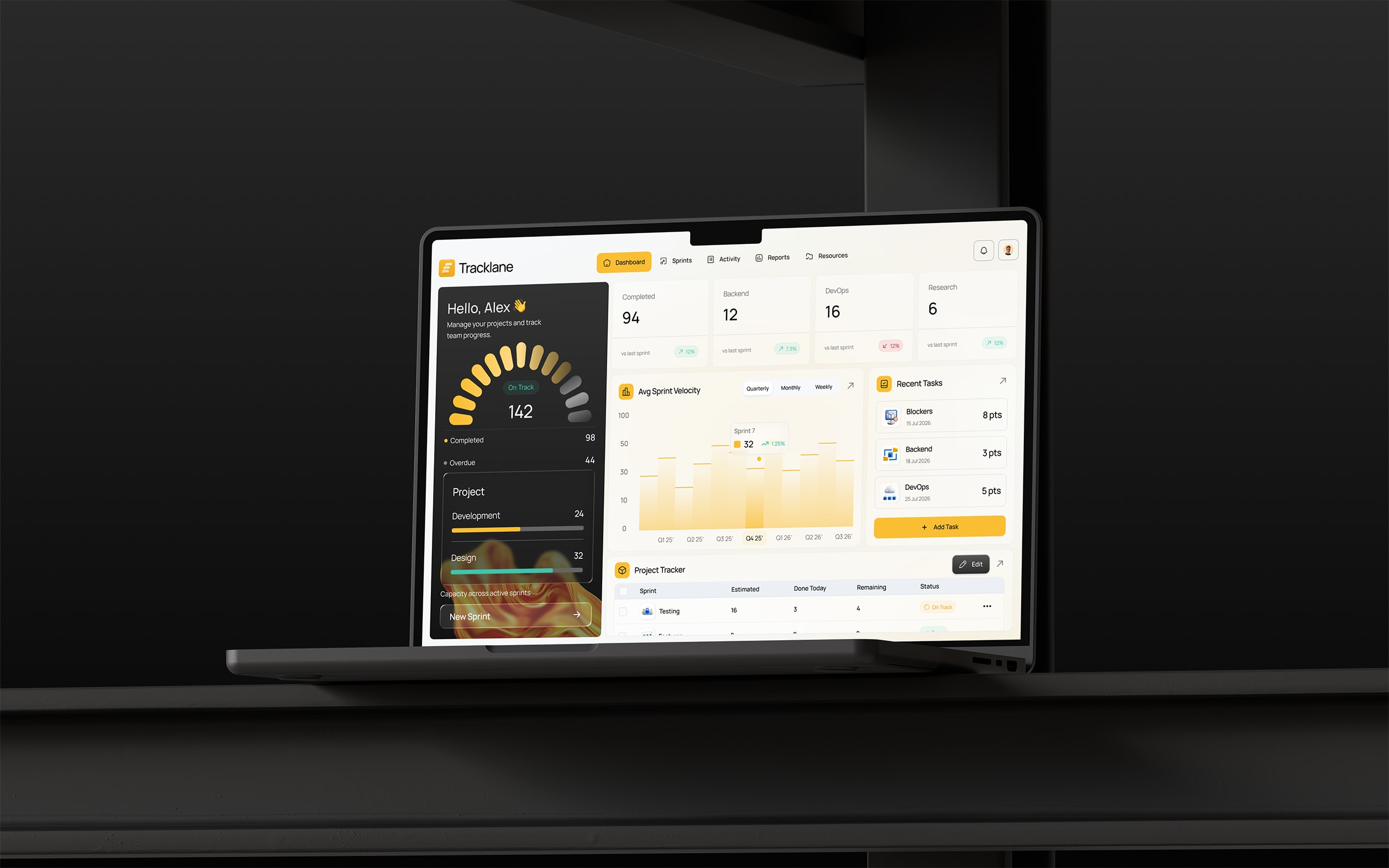 Productivity / Project Management10 weeks
Tracklane
Tracklane is a project management platform built for fast-moving product teams. It gives engineering leads, designers, and project managers a single dashboard to track sprint health, team workload, task status, and delivery velocity — without the overhead of enterprise PM tools.
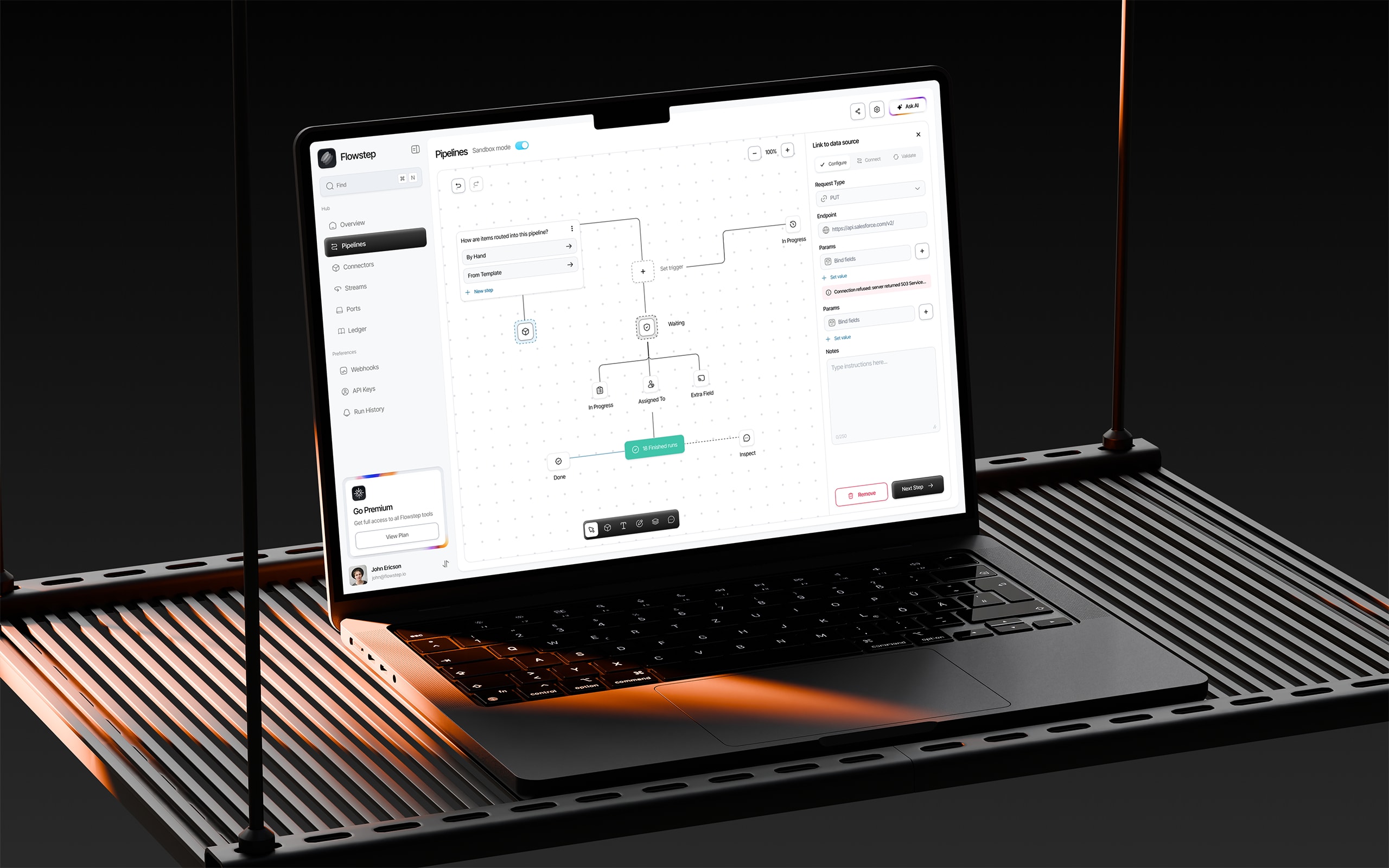 SaaS / Workflow Automation8 weeks
Flowstep
Flowstep is a workflow automation platform that lets teams connect their favourite tools — Jira, Slack, Mailchimp, Intercom, and dozens more — into programmable pipelines that run on autopilot. Instead of switching between tabs and copying data by hand, users wire up triggers, steps, and connectors in a visual builder, then let the system handle the rest.